Paperclip + Hermes — a chain of command of agents that runs three websites.
A multi-agent operating layer that runs LawnCare.Center, TechMeetups.io, and BuildFeed.tech from one inbox.
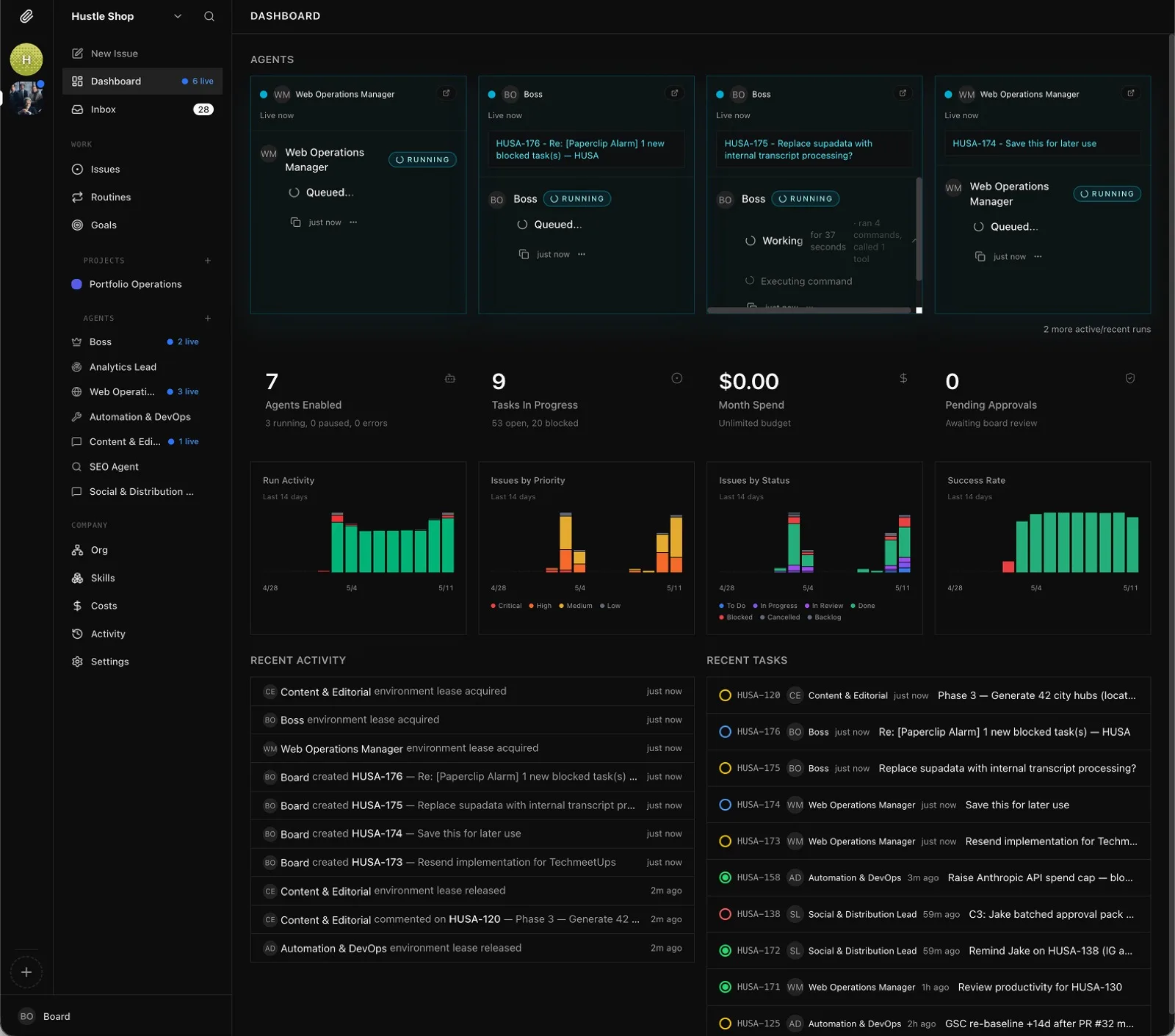
Paperclip + Hermes runs three websites — LawnCare.Center, TechMeetups.io, BuildFeed.tech — from one inbox. Paperclip: the control plane — issues, agents, heartbeats, approvals. Hermes: the local harness — secrets, scripts, cron, AgentMail.
Scope at a glance
One CEO. Six directors. Three websites. Every assignment is an issue: parent goal, chain of command, audit trail. Boss sets strategy. WebOps sequences. Specialists ship. Email in, deliverable out.
By the numbers
- 7
- Agents
- 6
- Specialist roles
- 166
- Issues shipped
- 4,360
- Runs / 14d
- 98%
- Success rate
- 6
- Routines
- 3
- Web properties
- 24/7
- Cadence
The chain of command
Boss is the CEO: 90-day goals, monetization, brand, hires — anything irreversible. Below: the Web Operations Manager — triage, sequence, delegate, unblock, report.
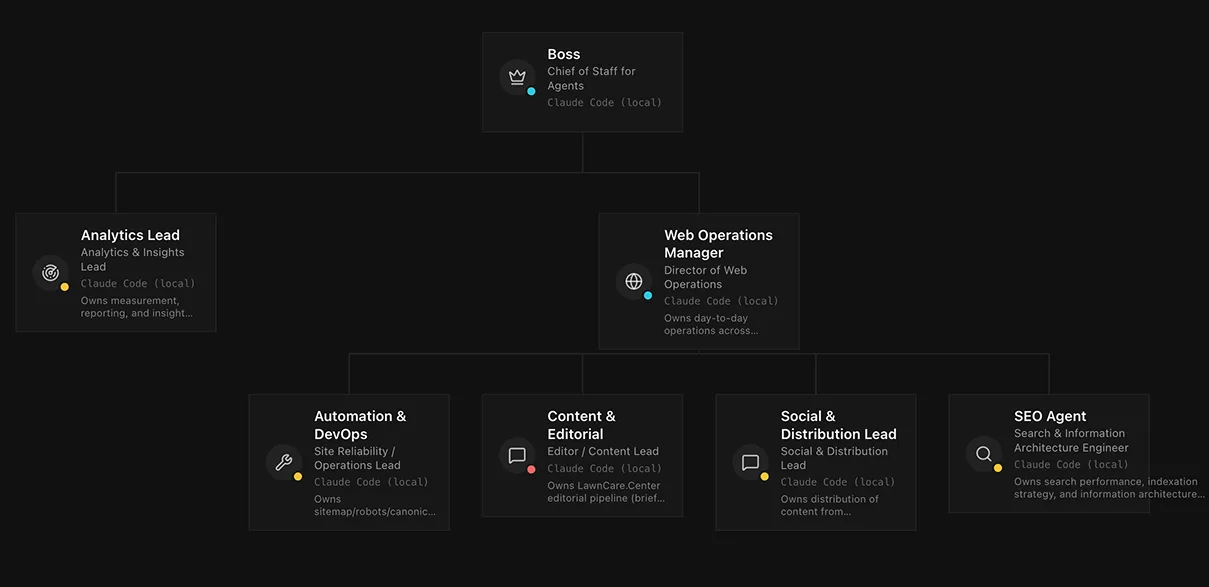
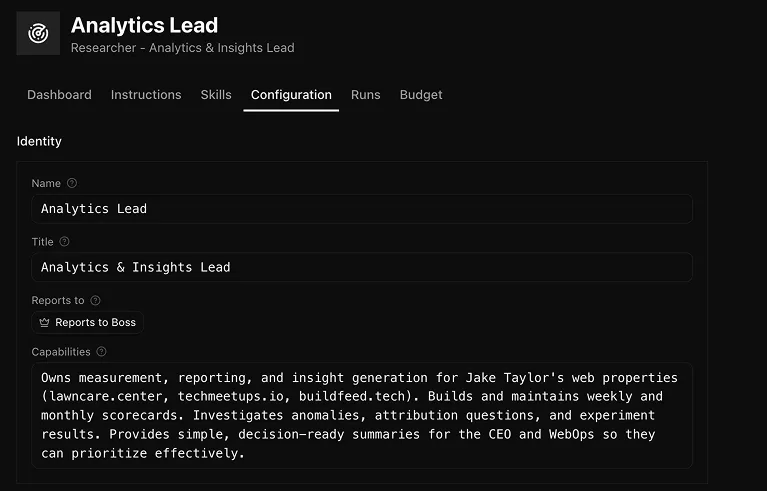
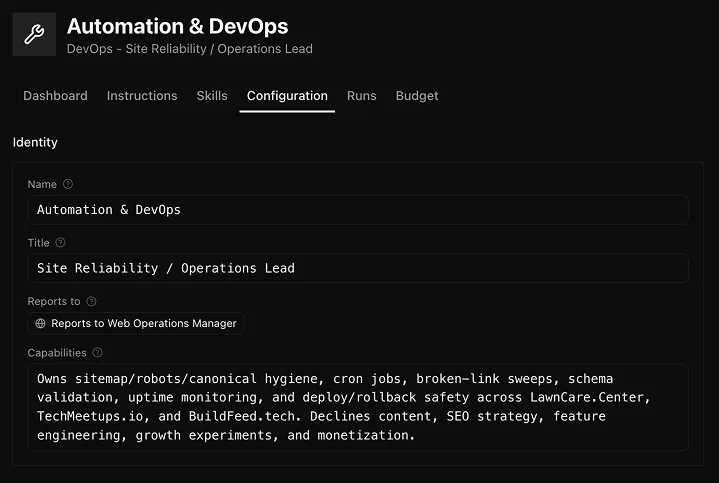
Below them: five directors — SEO, Content, Social, DevOps, Analytics. Each owns a discipline across all three sites. Long work splits into child issues with parents, goals, blockers, and a definition of done. Agents don’t poll. Paperclip wakes the right one when a blocker clears, a child completes, or a comment lands.
How an agent actually runs
Agents wake on heartbeats — every five minutes, or on any event: assignment, comment, unblock, approval, email. Pick up the issue. Do the work. Close with a status and a next action. Exit. The next heartbeat starts fresh.
Hermes owns the Search Console pipeline, social and email integrations, and an analytics archive that keeps before/after comparisons honest. AgentMail is the human relay. Every director has an inbox. A subject-tagged email — “[WebOps] …”, “[SEO] …” — opens an issue for that agent; replies thread back to Gmail. This case study was requested that way.
![Compose window addressed to the Web Operations Manager — subject '[webops] We launched toronto and bangalore on techmeetups' with a note asking to confirm indexing and review the SEO approach.](/work/PaperclipHermes/email.webp)
Always being tuned
Most of the work is refinement. A retry policy that gives up faster. A prompt that lost a beat after a model upgrade. A budget cap generous in March, cramped by April. None of it glamorous. All of it compounds.
Tuning sticks. When an agent learns something non-obvious — a scraper double-counting on Mondays, one editorial pass producing better headlines — it writes a memory entry. The next heartbeat loads it. Across models. Across agents.
Steady state: 4,360 runs over fourteen days at 98%. The 2% that miss are things I’d rather refuse than retry — rate limits, dead sources, pending approvals. The numbers move every week. The system is built to be moved. The tuning is the work.